What Color Eyes Will My Baby Have? The Science of Eye Color Genetics
Will your baby get mom's warm brown eyes or dad's icy blue ones? Eye color is the trait parents wonder about most — and the genetics behind it are far more interesting than the simple charts from school biology suggest.
The Short Answer: It's Not One Gene
For decades people believed a single gene decided eye color, with brown always beating blue. Modern research tells a richer story: at least 16 genes work together, with two of them — OCA2 and HERC2 on chromosome 15 — doing most of the heavy lifting.
These genes control how much melanin (brown pigment) builds up in the iris:
- Lots of melanin → brown eyes
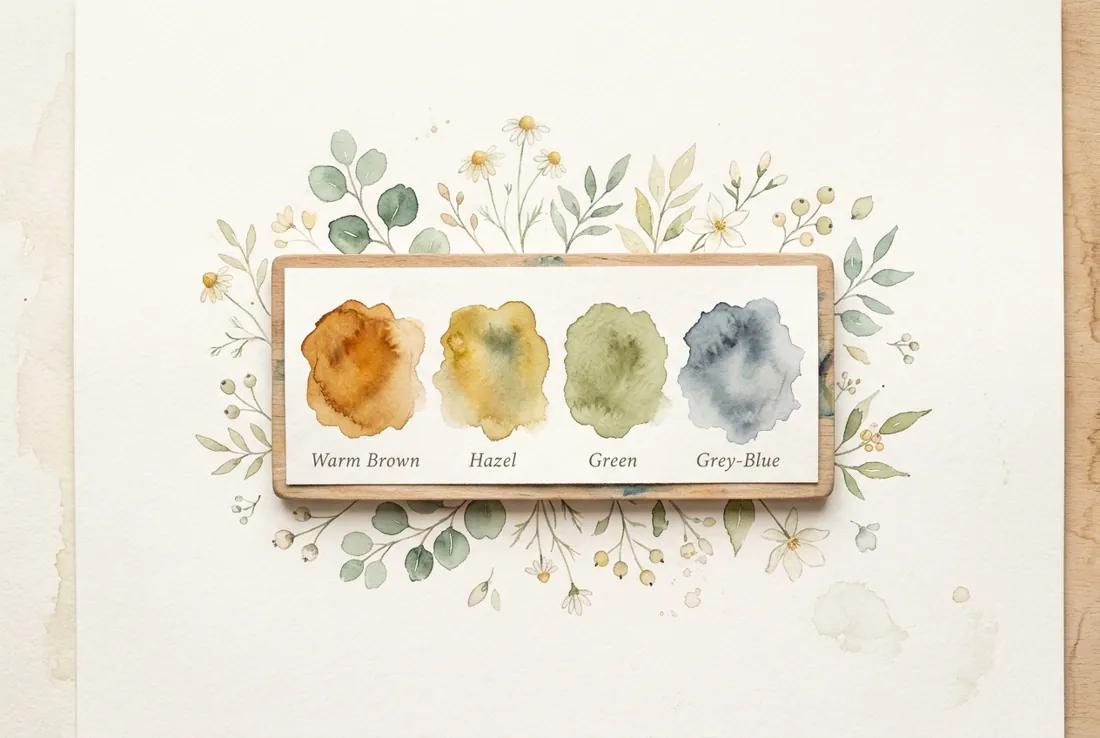
- Moderate melanin → hazel or amber eyes
- Little melanin → green or grey eyes
- Very little melanin → blue eyes
Here's the fun part: blue eyes aren't actually blue pigment. They're an optical effect — the same light scattering that makes the sky look blue.
Probability by Parent Combination
While no chart can be exact (that's what makes genetics exciting), large population studies give rough odds:
- Brown + Brown parents → about 75% brown, 19% green, 6% blue
- Brown + Blue parents → roughly 50% brown, 50% blue or green
- Blue + Blue parents → about 99% blue, occasional green surprises
- Green + Blue parents → around 50% green, 50% blue
- Brown + Green parents → brown slightly favored, all outcomes possible
Yes — two brown-eyed parents can absolutely have a blue-eyed child. If both parents carry a hidden recessive variant, there's roughly a 1-in-4 chance it surfaces. Grandparents' eyes matter more than most people think.
Why You Can't Judge at Birth
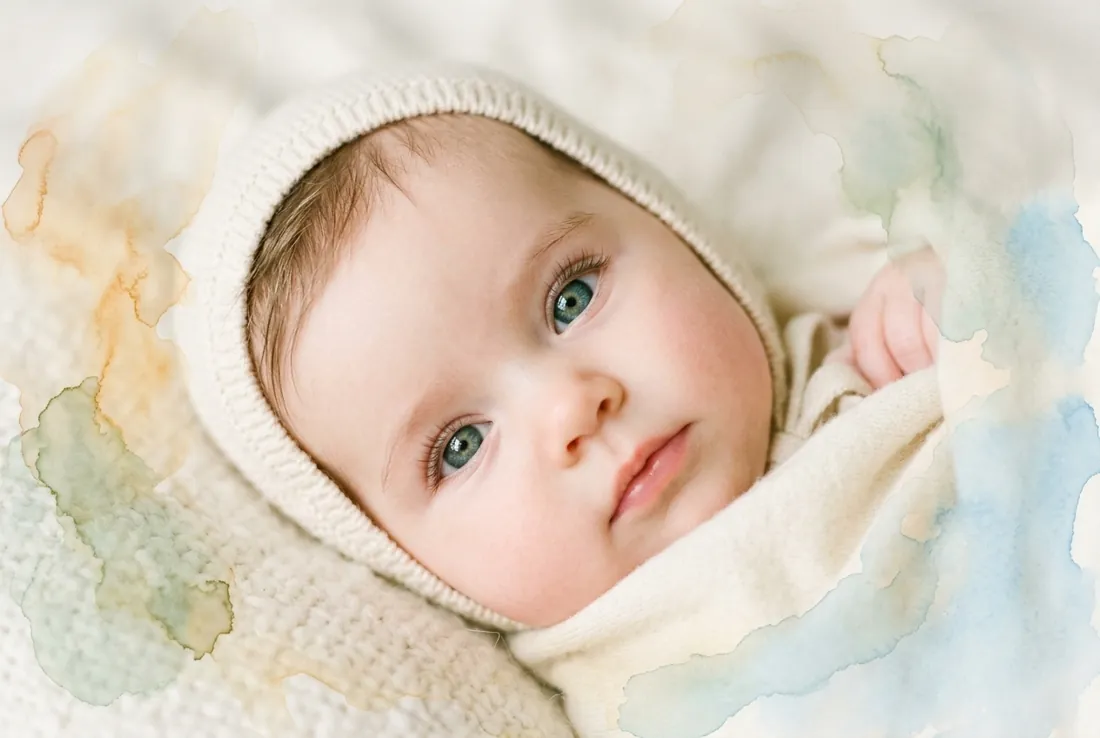
Many babies — especially those with lighter skin tones — are born with grey-blue eyes that darken over months as melanocytes wake up and produce pigment. The most noticeable shifts happen between 3 and 12 months, and subtle changes can continue until age three.
So if you're staring into your newborn's steel-blue eyes wondering if they'll stay — the honest answer is: wait and see.
Beyond Color: What Else Eyes Inherit
Eye color gets the attention, but babies also inherit:
- Eye shape and spacing — strongly heritable, often the first thing relatives comment on
- Eyelash length — thank a dominant gene for long lashes
- The epicanthic fold — the inner-corner fold common in East Asian heritage
Curious how all these features might combine in your little one? Our article on what your baby will look like covers the full genetic picture, and the who will baby look like quiz settles the mom-vs-dad debate the fun way.
FAQ
Can two blue-eyed parents have a brown-eyed baby?
It's extremely rare but not impossible. Eye color involves many genes, and unusual combinations of the minor ones can produce unexpected results.
When will my baby's eye color be final?
Most of the change happens in the first year. By age three, eye color is essentially settled for life.
Do all babies really have blue eyes at birth?
No — that's a myth. Babies of African, Asian and Hispanic heritage are usually born with brown or dark grey eyes. Light grey-blue newborn eyes are most common in babies with European heritage.
Is there a way to see it instead of calculating it?
Genetics gives you percentages — AI gives you a picture. Upload two photos and see a realistic preview of your future baby's face, eyes included.
See Those Eyes Today
Probability charts are fun, but nothing compares to actually seeing a face. Our AI studies both parents' photos — eye color, shape, spacing and all — and shows you a realistic portrait of your future baby in seconds.
Share this article